Office safety and fire basicsA safer office, every day
A healthy desk, everyday hazards, what to do when the fire alarm rings, and how first aid and accident reporting work at your company.
Send your name and email, and we set up your place. Nothing to pay.
General guidance, not legal advice
Intro film · about 1 minLesson 1 of 5
[01] The story
Meet Hanna.
 Hanna's story
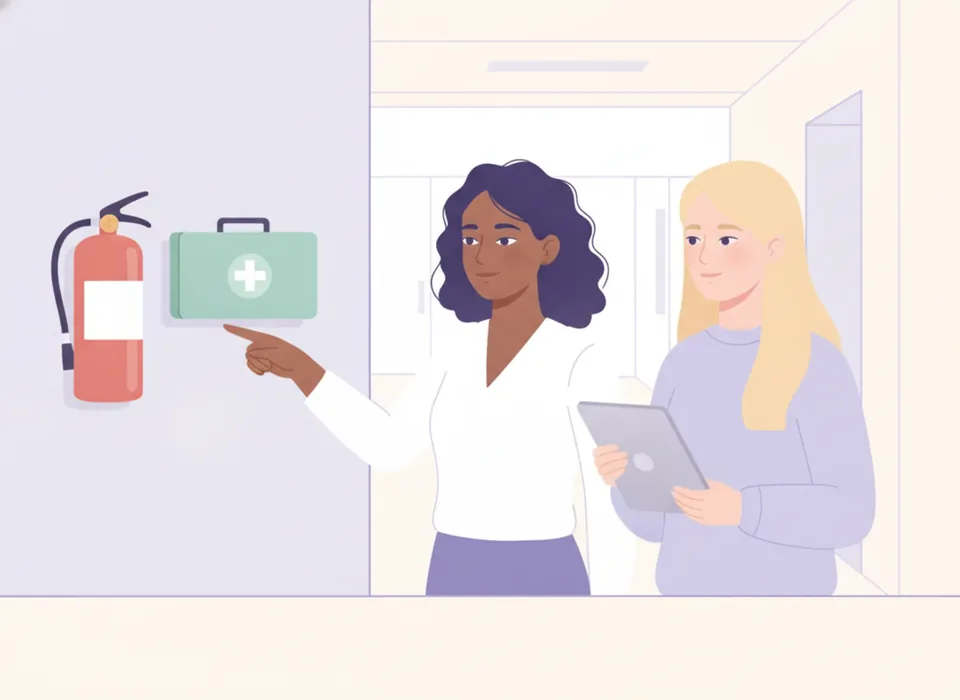
Meet Hanna. Monday, 9:00, her first day as office coordinator at a busy 60-person company. Aylin, who is meant to show her around, is called into a meeting after five minutes:
The message“Have a look round, I'll be back after lunch.”
On the way to the kitchen Hanna passes a fire door held open with a wooden wedge, and a stack of boxes on the stairs. Everybody walks past. She is new. Is it her place to say anything?
What would you do? The course follows Hanna through 5 everyday moments like this one.
[02] Try it now
Find the red flags yourself.
A real exercise from lesson 4, exactly as it appears in the course.
No sign-up needed. Tap, check, and see why.
spot the red flags
The team chat during an alarm
Tap everything you would not do.
dotted lines can be tapped. Not all of them are red flags.
Team chatFloor 3, 14:02, the fire alarm is ringing
[03] What you'll be able to do
What employees learn about office and fire safety
01Lesson 1
Explain why safety training happens and who adds which part.
02Lesson 2
Set up a desk that fits you and break up long screen time.
03Lesson 3
Spot trips, slips, falls and electrical hazards, and know what to do.
04Lesson 4
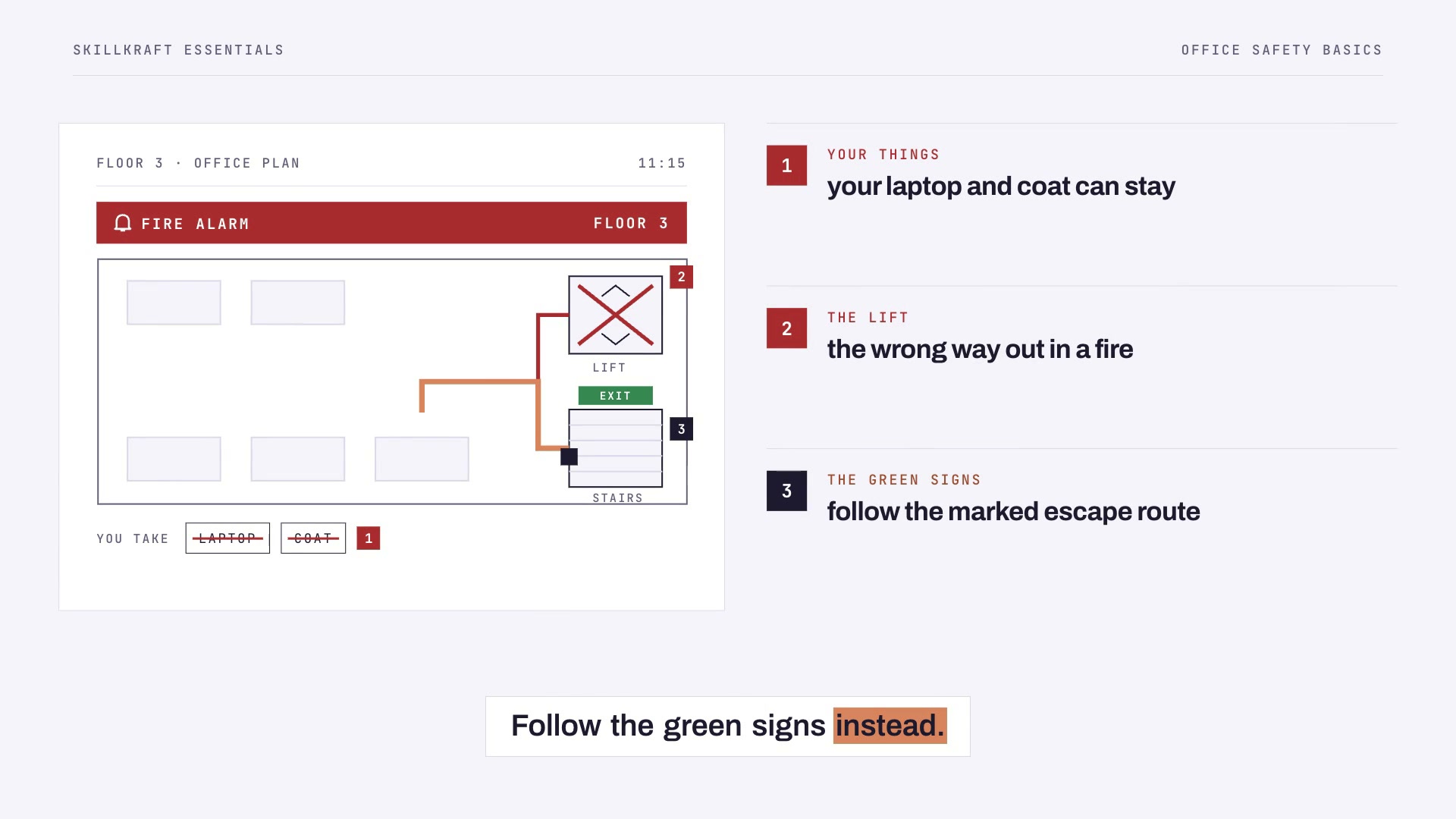
Know how fires start, and the four steps when the alarm sounds.
05Lesson 5
Know who helps, how to call 112, and why every accident and near miss is reported.
FinalQuiz
Prove it: 8 of 10 right and the course is complete.
[04] Lesson by lesson
What the office safety course covers
Short lessons you do, not watch: a scene from the story, then exercises that check you got it.
Lesson 1: Why Safety Training Exists
Most office days are safe.
You'll be able to: explain why safety training happens and who adds which part.
- Match the pairs
- Sort real examples
- 5 quick questions
Lesson 2: A Healthy Desk and Screen Work
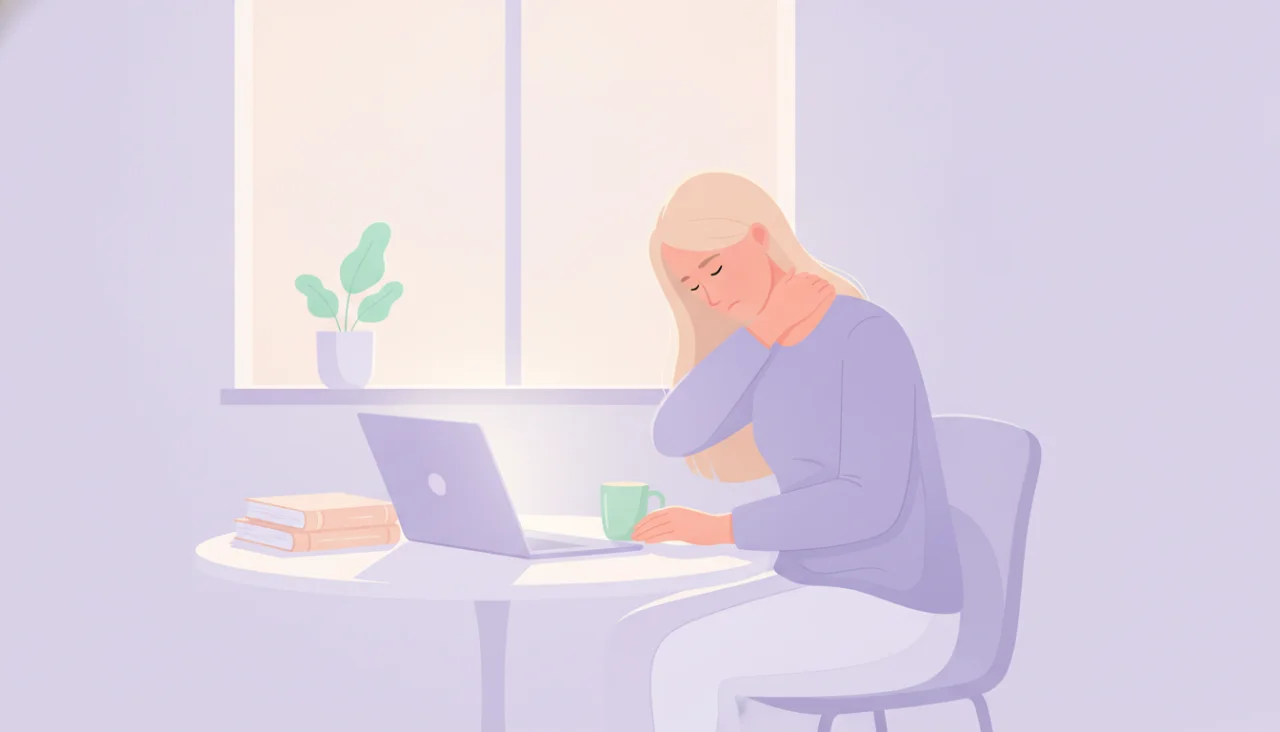
Most office aches don't come from one bad day.
You'll be able to: set up a desk that fits you and break up long screen time.
- Put the steps in order
- Match the pairs
- Sort real examples
- 5 quick questions
Lesson 3: Everyday Hazards
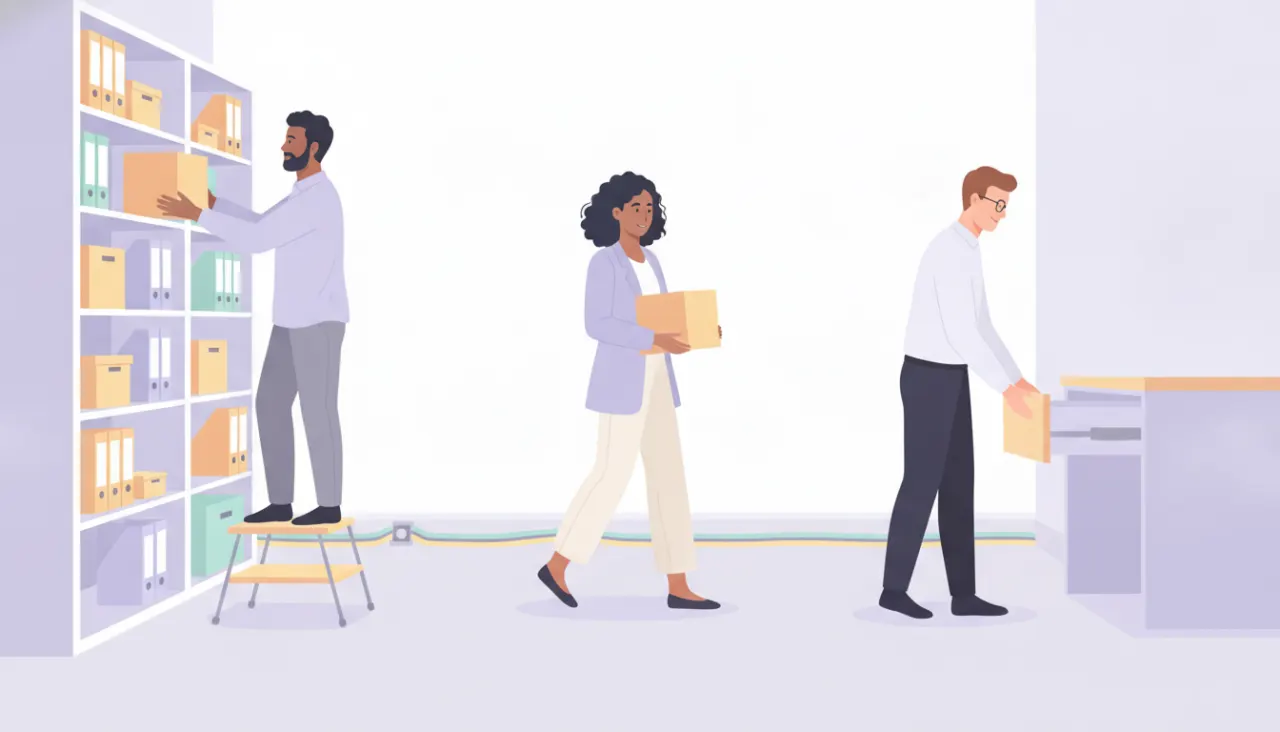
An office looks like a safe place, and it mostly is.
You'll be able to: spot trips, slips, falls and electrical hazards, and know what to do.
- Put the steps in order
- Match the pairs
- Sort real examples
- 4 quick questions
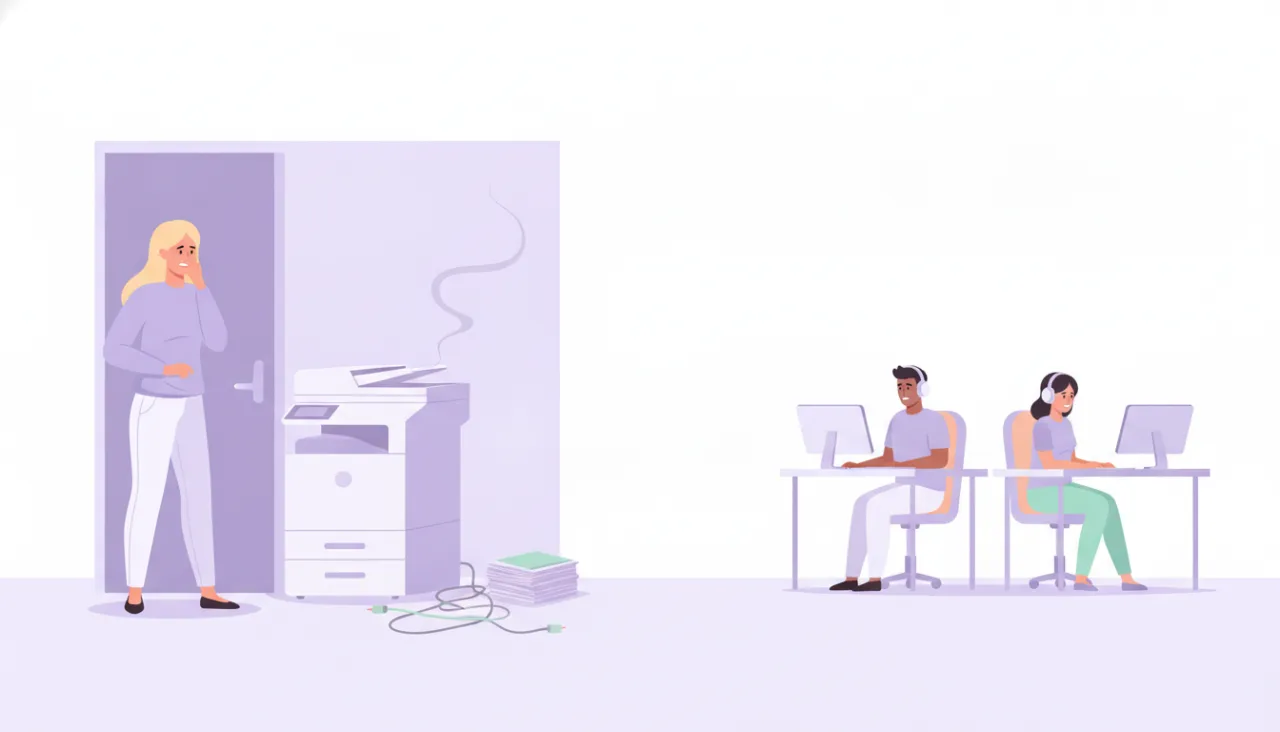
Lesson 4: Fire: Prevent, Alarm, Escape
Office fires are rare, and most can be prevented.
You'll be able to: know how fires start, and the four steps when the alarm sounds.
- Spot the red flags
- Sort real examples
- A step-by-step diagram
- 4 quick questions
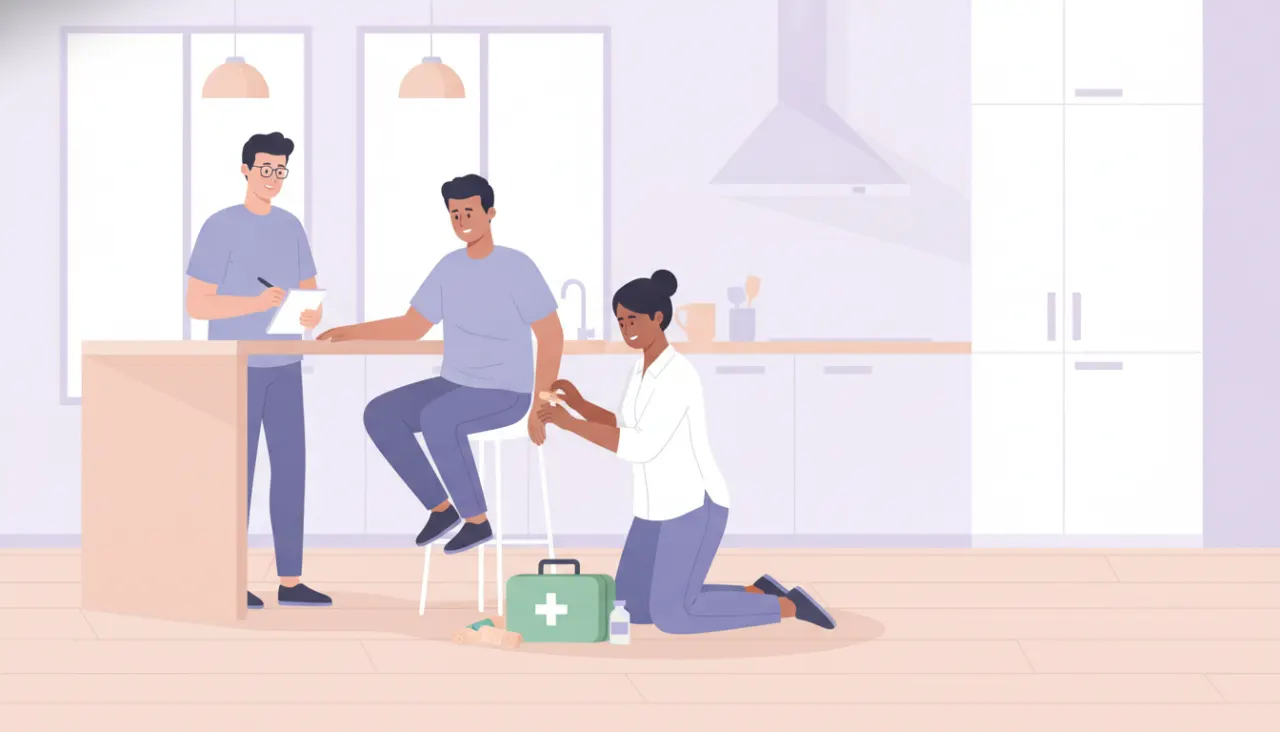
Lesson 5: First Aid and Accidents
Most office injuries are small: a cut finger, a bumped head, a twisted ankle.
You'll be able to: know who helps, how to call 112, and why every accident and near miss is reported.
- Choose what happens next
- Put the steps in order
- Match the pairs
- 4 quick questions
Final Quiz
10 questions from the 5 lessons. 8 right to pass, and you can try again as often as you like.
[05] For companies
Give this course to your team
- 01Assign it to everyone who needs it, in your own Skillkraft Academy.
- 02See who has started, who has finished, and every final-quiz score.
- 03Download the list as a CSV file when an auditor asks.
- 04All six Essentials are included in every academy.
Sign-in with Google today. Microsoft sign-in soon.
| Name | Status | Final quiz | Completed on |
|---|---|---|---|
| Jonas Wagner | Completed | 9 / 10 | 07.10. |
| Ana Novak | Completed | 10 / 10 | 07.10. |
| Marco Rossi | In progress | — | — |
| Sophie Hoffmann | Completed | 8 / 10 | 08.10. |
| Karin Lindqvist | Not started | — | — |
[06] Questions
Good to know
Is it really free?
Yes. The course costs nothing to take. Send your name and email, we set up your place, and you start with lesson 1.
How long does it take?
About 35 minutes: 5 short lessons and a final quiz. Do it in one sitting or a lesson at a time; your progress is kept.
What happens at the end?
A final quiz of 10 questions. Get 8 right and the course is complete, in your name. You can try again as often as you like.
Do I need any background?
Any office employee. No special background needed.
Does it work on my phone?
Yes. Every lesson, exercise and the quiz work on a phone, a tablet or a laptop.
Is this legal advice?
General guidance, not legal advice. Your company adds its own contacts and rules.
Can my company give it to the whole team?
Yes. In your own Skillkraft Academy you assign it, see who has finished, and download the list for audits. All six Essentials are included.
35 minutes well spent
Send your name and email, and we set up your place. Nothing to pay.
General guidance, not legal advice. Your company adds its own contacts and rules.